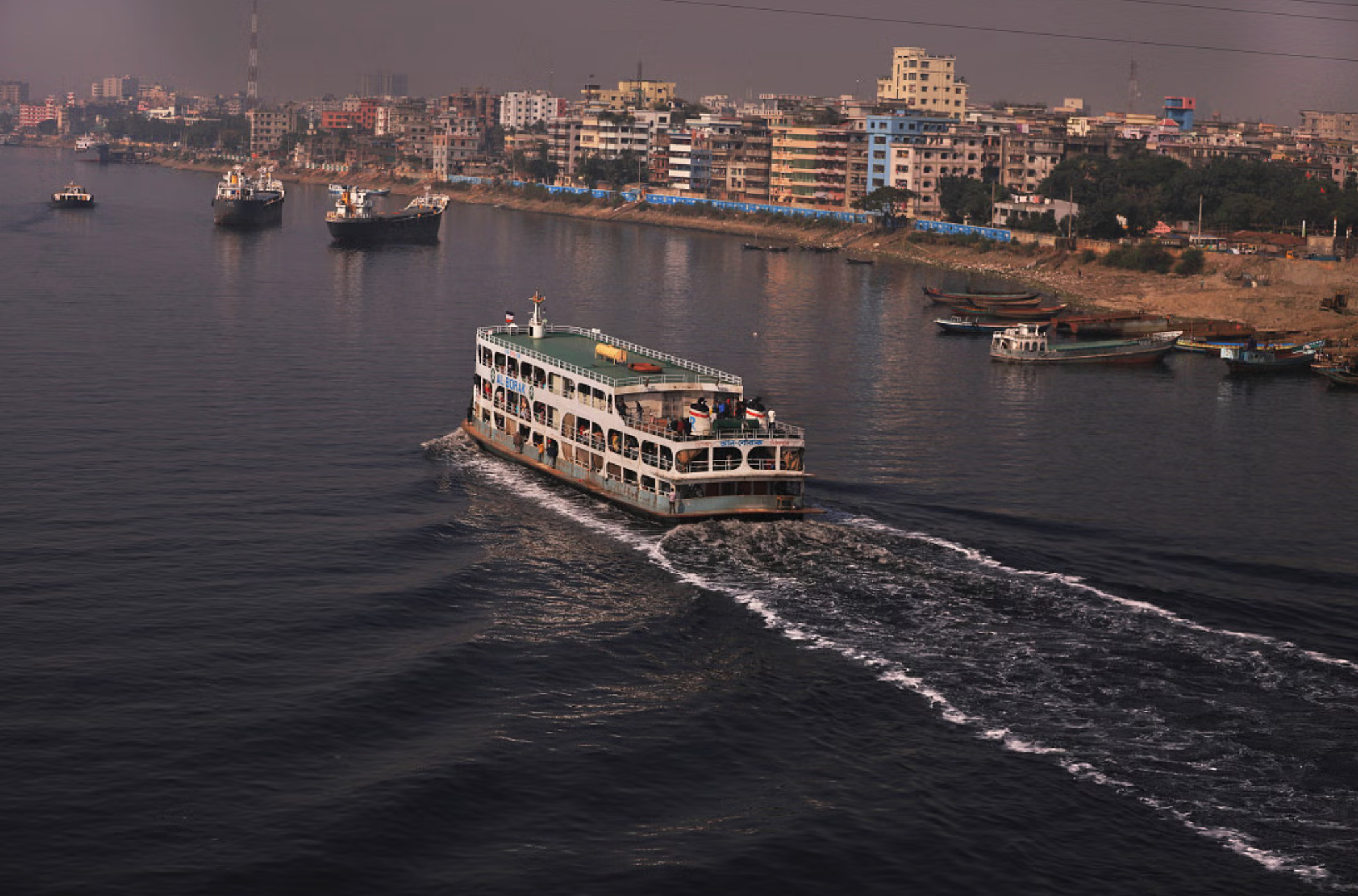
Despite its significant natural resources and ecological importance, the Bengal Delta is highly vulnerable. It faces the impacts of unsustainable urbanisation, inappropriate water management, and a lack of a comprehensive knowledge system regarding the landscape. It is ironic that a riverine delta, with its geographical and climatic advantages, faces a water crisis and biodiversity loss. The solution lies in efficient management and a shift of mindset from land-based development to landscape-based development for inclusive habitat co-creation—in our context, with and by our people. Is this ever-shifting and ever-increasing delta "lands in waters" or "waters in lands?" Shouldn't we let the waters flow and the lands grow here? The challenge lies in the disconnect between landscape management and the perception of development. There is a pressing need for a shift in educational priorities and governance structures to promote a resilient and sustainable future.

Home
About
Hexagon
Contact
Gallery
Home
About
Hexagon
Contact
Gallery



